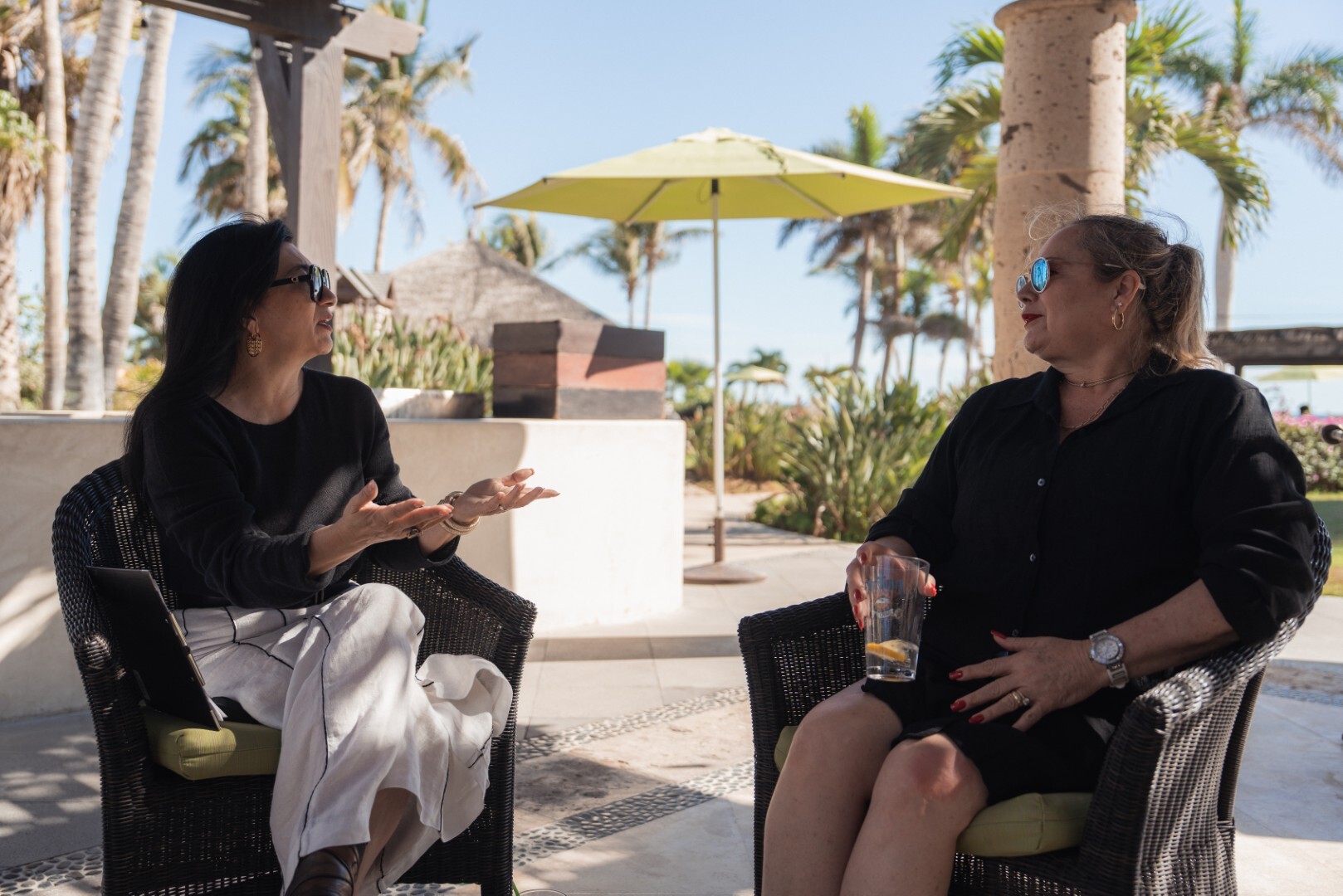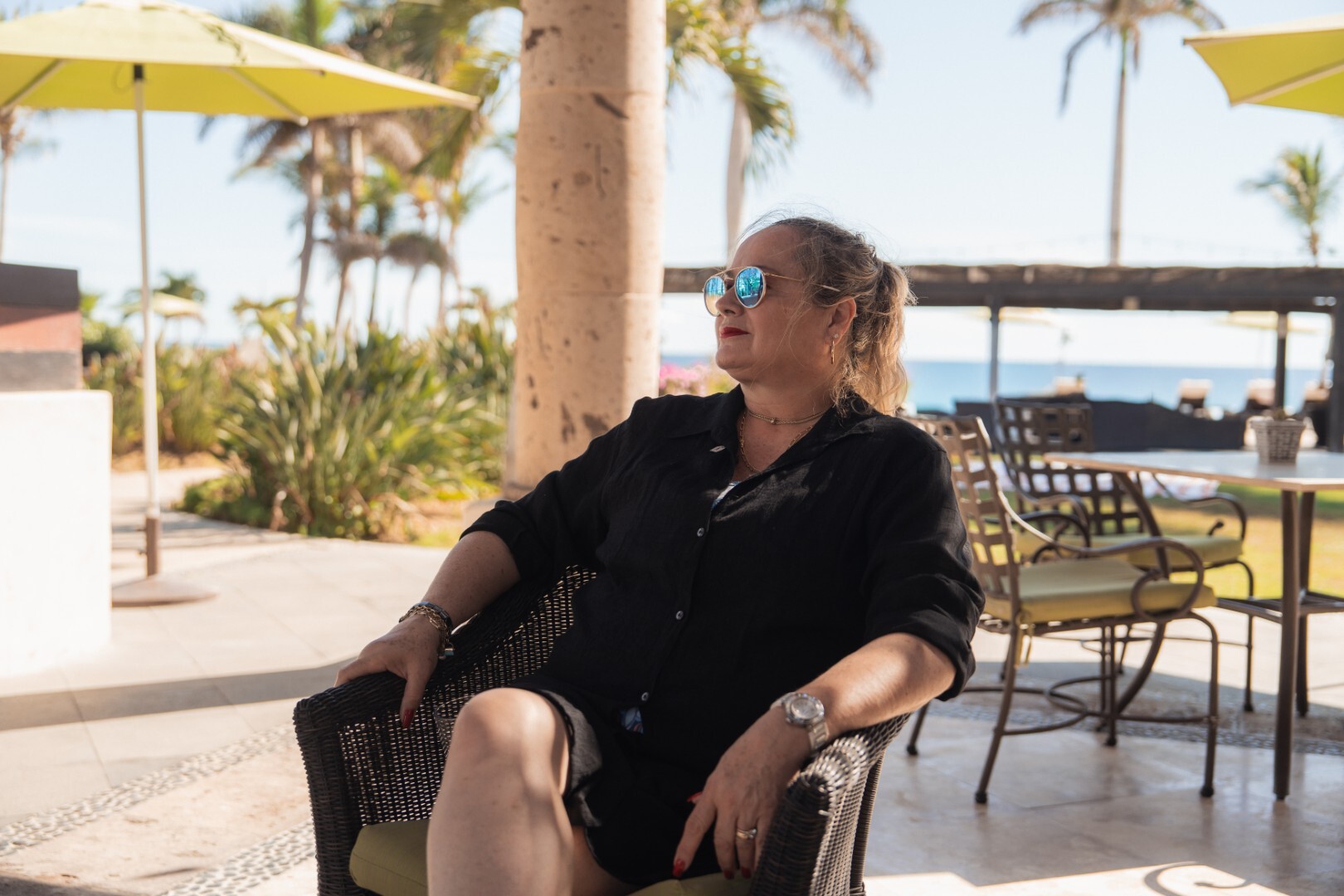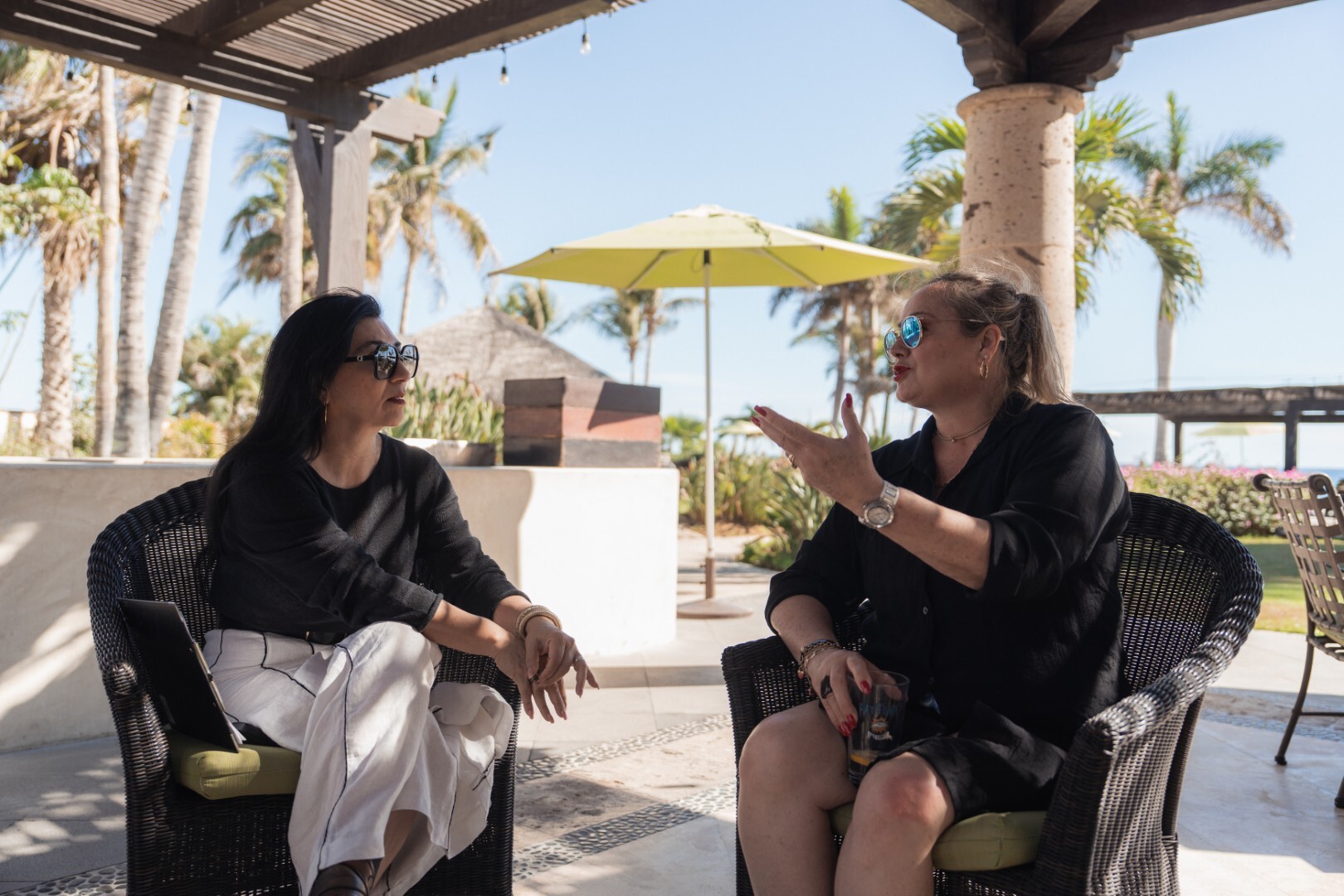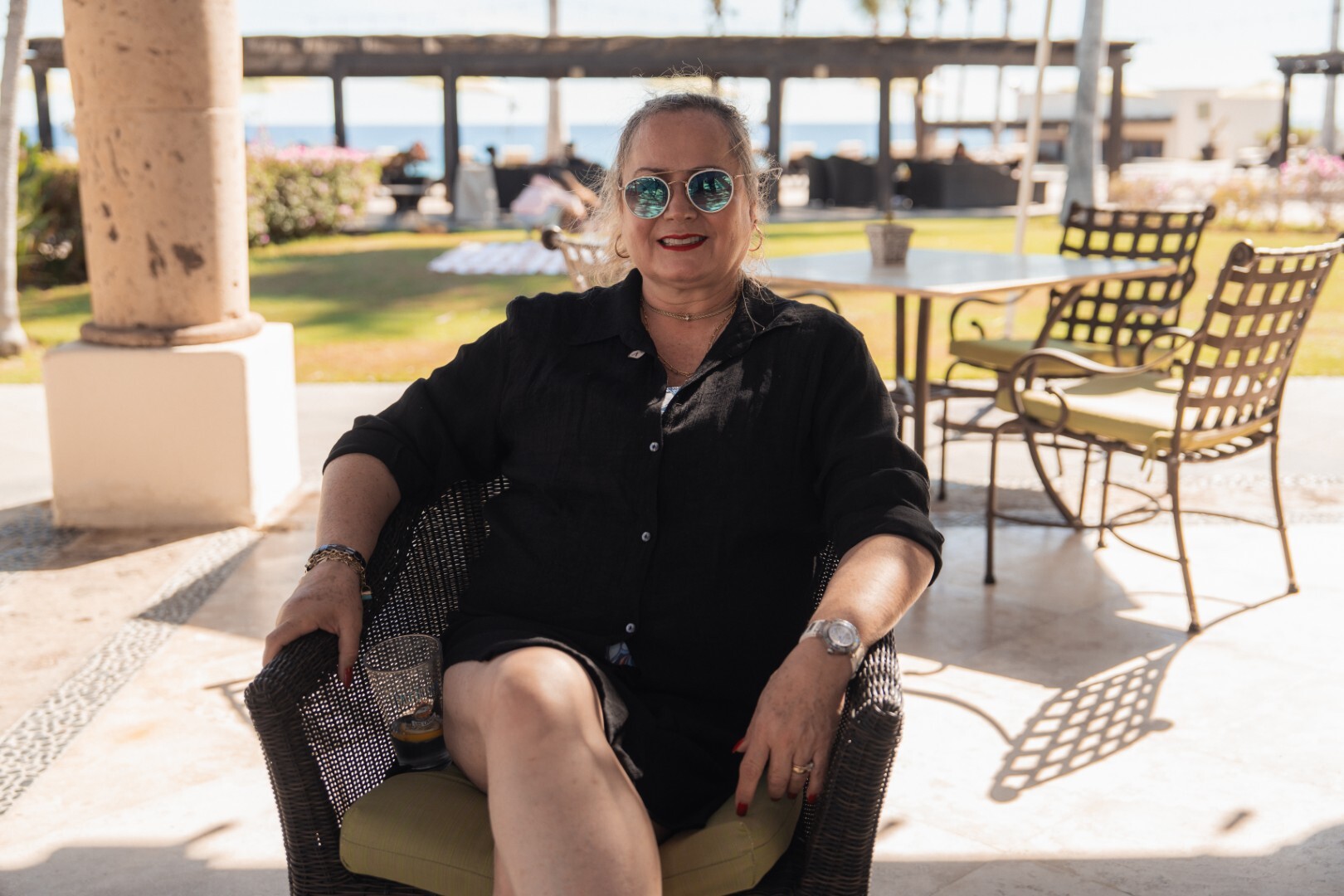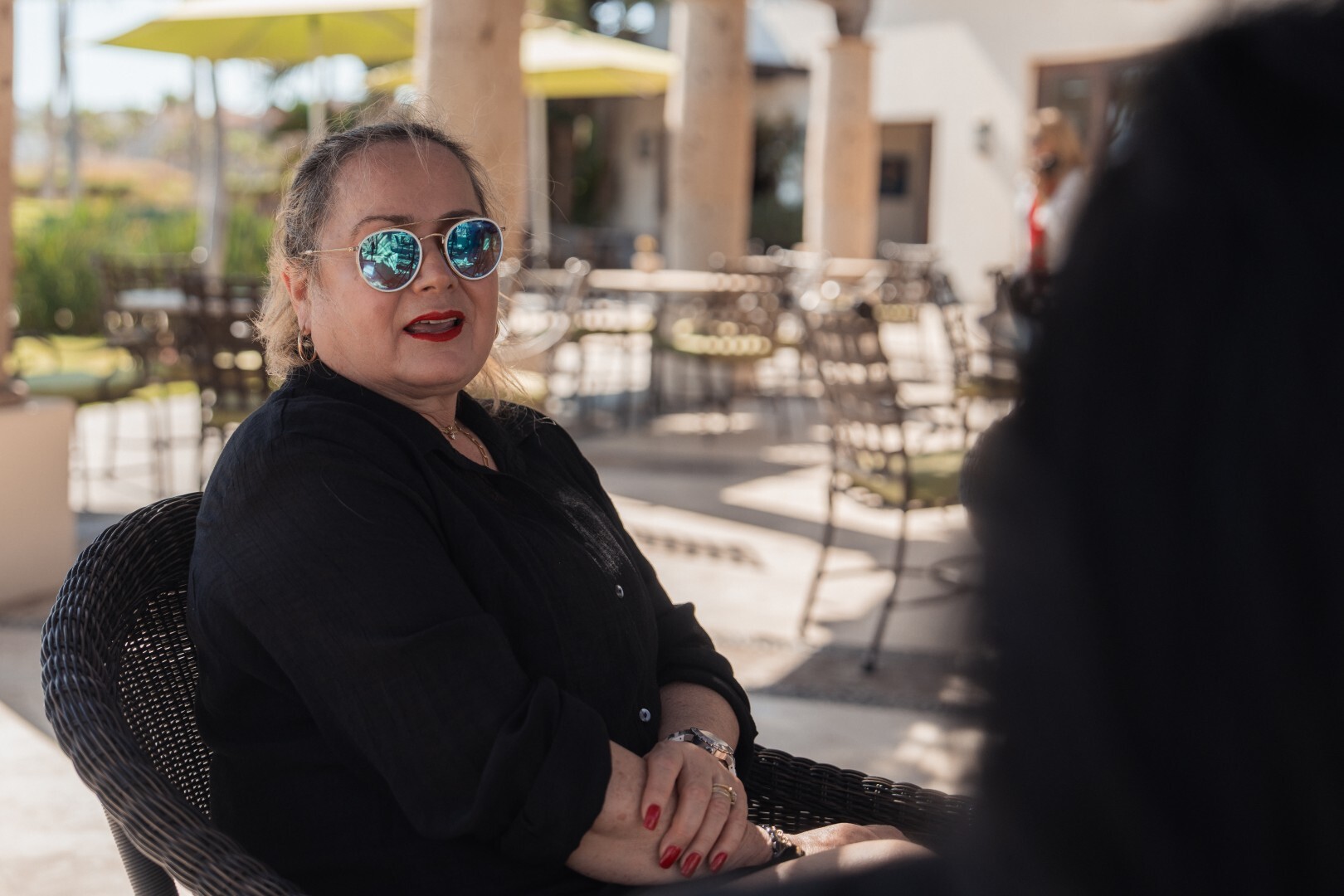
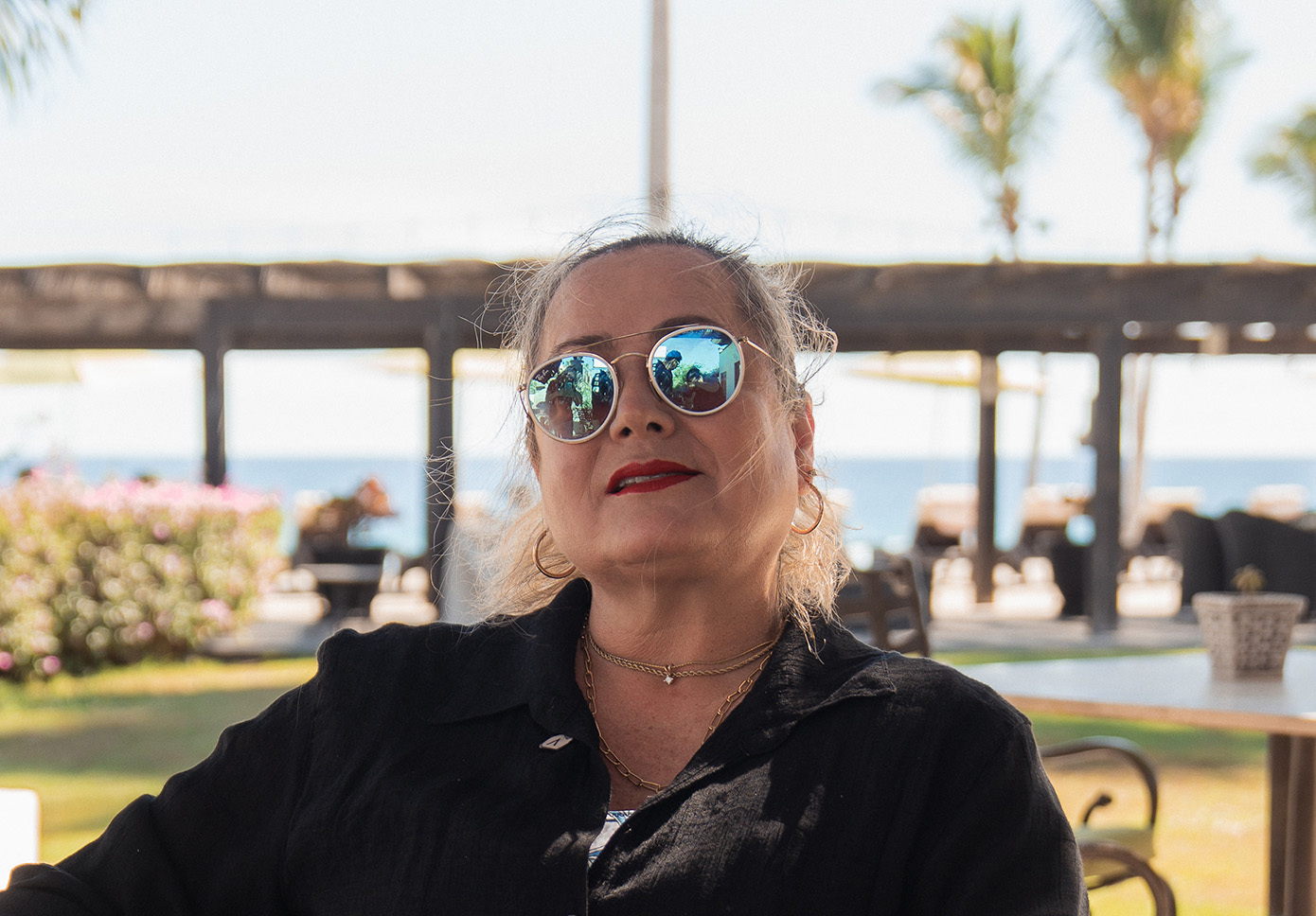
Rosa Luz Treviño
Together with Blanca Pedrín, I had to lead the management and collaboration with authorities and businesspeople. Despite personal sacrifices and some disagreements, the satisfaction of having contributed to the development of the destination makes up for the ups and downs.
Beginnings and Arrival in Los Cabos
My name is Rosa Luz Treviño de Mayfield. Thirty-six years ago, I arrived in this wonderful town to settle permanently after completing my university studies. The reason for our arrival goes back to my mother, who met Sergio Rodríguez, a well-known figure in Los Cabos, in Guadalajara. Thanks to that friendship, she visited Cabo San Lucas when it was still mainly a fishing destination full of charm, and she immediately recognized the area's potential.
My mother began selling handicrafts to an Argentine woman who owned the only store in town, which motivated her to open her own, focused on high-quality national art, such as Huichol art and tenangos. Thus, Galería Sol Dorado was born, with its first branch established in Cabo San Lucas, even before the marina existed.
Anecdotes and First Steps
I have fond memories of that time, such as when Sammy Hagar visited the gallery and, after purchasing several sculptures, paid with an exclusive card, teaching me the value of treating everyone well, regardless of appearances.
With a vision for the future, my mother proposed opening another gallery in San José del Cabo, where there were no similar stores. Thus, we were pioneers in that location, and little by little, the gallery grew. After finishing my degree, I joined my mother to work together.
Development and Expansion
On one of my walks around San José, I discovered an old house with a large garden and envisioned a store there. We managed to rent the space and, over time, learned the valuable lesson of never building on someone else's land, as we invested a lot and, although we prospered, we depended on agreements with third parties.
San José began to prosper: more shops and restaurants opened, and alliances were formed to promote the city center. Figures such as Armida Castro, Enrique Silva, and Loic Tenoix were involved. However, our multiple stores in airports and other cities prevented us from devoting as much time as we would have liked to these efforts.
Consolidation of the Historic Center and the Arts District
Over the years, the Art District emerged, initially limited to a few streets. We organized ourselves to identify and protect historic buildings, covering the costs of the necessary paperwork and technical studies. Finally, with the collaboration of authorities and other businesspeople, we managed to delimit the Historic Center of San José del Cabo into three rings: downtown, the estuary, and the cemetery.
The Art District was formally launched in 2001, inviting tourists to visit the galleries during the off-season. Upon returning from a stay in Texas, I found a thriving art scene, and in 2007, we began organizing the art walk, consolidating partnerships between galleries and the historic center.
Challenges and Achievements of the Remodeling
The work was arduous but rewarding. We created a world-renowned tourist attraction: the Historic Center of San José del Cabo. It was a team effort, and at the time, Governor Marcos Covarrubias provided us with resources through a trust fund, which allowed us to move forward with the remodeling of the center.
The work was carried out in stages to minimize the impact on businesses, although there was resistance from some merchants due to the temporary closures. Weekly meetings with authorities, developers, and business owners were essential to monitor progress and resolve problems. However, over time, deficiencies in the supervision of works and services emerged, which has led to current infrastructure problems.
Current Challenges and Reflections
Today, the main challenges are the lack of investment in basic services such as water, electricity, and connectivity, as well as disorderly growth. It is imperative to take advantage of resources such as solar energy to illuminate the historic center. We conducted photographic studies of the streets to highlight the need for improvement and avoid resignation in the face of mediocrity.
Together with Blanca Pedrín, I had to lead the management and collaboration with authorities and businesspeople. Despite personal sacrifices and some disagreements, the satisfaction of having contributed to the development of the destination makes up for the ups and downs. We are working for a San José del Cabo that complements and contrasts with Cabo San Lucas.
Community Participation and Governance
The association operated solely on membership fees and with the support of allies such as Rubén Reachi, who facilitated the development of guidelines through the Los Cabos Tourism Trust. Business meetings were numerous and tense due to the presence of many leaders, but they were necessary to reach consensus.
We invested time and personal resources, sometimes to the detriment of our own businesses, because we believed in the project. Hopefully, the new generations will commit to caring for and continuing this legacy.
Regulations and Future
We have robust regulations for the Historic Center, covering everything from planning to urban image, which were approved thanks to the involvement of all three levels of government. However, beyond the rules, it is the will of the authorities and business leaders that guarantees the growth and care of our shared heritage.
The future of the Historic Center will depend on the commitment and love for San José del Cabo of those who now live there. I celebrate that people like Blanca Pedrín are continuing this collective effort.
Galería