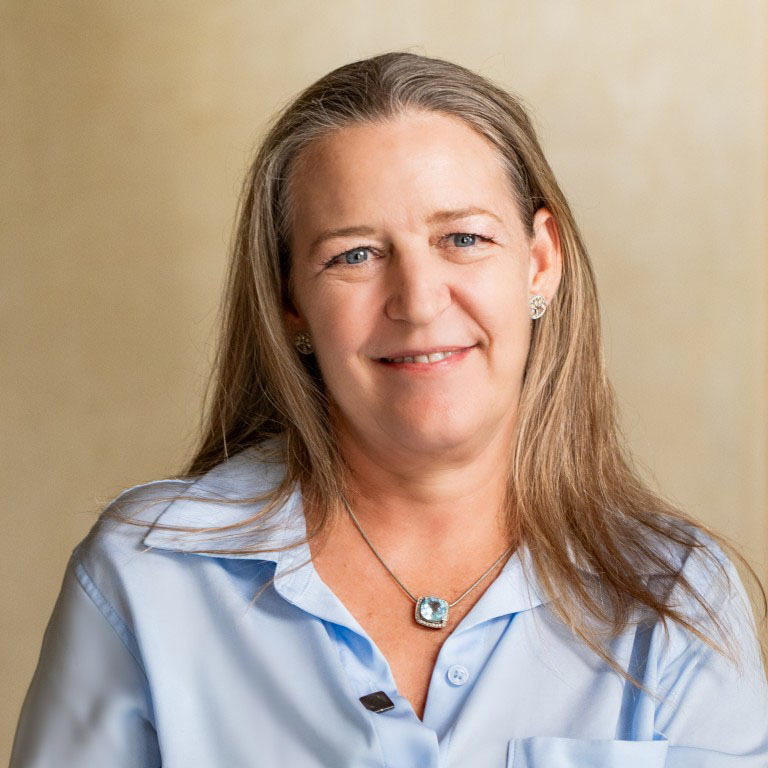
Andrea Ehrenberg
Hotel entrepreneur, mother, citizen, and one of the most consistent voices in the restoration of the historic center, beaches, and estuary of San José. Her story is that of a woman who turned her love for her town into concrete projects to beautify it, protect it, and keep its identity alive.
Family Background and Multicultural Environment
My parents have German roots; my dad arrived in Mexico when he was very young, which influenced him to adopt Mexican culture, while my mom always retained her German identity completely. I grew up in a home enriched by cultural diversity, which shaped both my personal and professional life.
Three languages were spoken at home: German, Spanish, and English. Although we maintained German traditions, my mother wanted us to integrate into Mexican culture. Therefore, despite their Protestant beliefs, they decided that we should be Catholic in order to access private education, which at that time had a strong religious component.
During my childhood, English was the predominant language, although my first language was German. I later learned English and, finally, Spanish, as my parents communicated with each other in English. The presence of my maternal grandmother, who was from East Germany and lived with us until her death, further enriched our family environment.
I am the daughter of my parents' second marriage. From previous relationships, my dad had four children and my mom had two, with me being the only child they had together, the one who united the family made up of "yours, mine, and ours," so there are six older siblings and me.
Vocation and Academic Career
Since I was little, I felt a calling for service, so I chose hospitality as a career. When I made that decision, it coincided with the opening of El Squid Roe, and my dad suggested I work there before going to study in Switzerland, to confirm whether I really liked the environment. At 18, I worked there for six months and confirmed my passion for the sector, although I was also attracted to archaeology.
The recommendation of a friend, the son of a hotelier, led me to choose Le Roches school in Switzerland, where I studied for three years. My love of cooking then took me to Le Cordon Bleu. Later, I transferred credits to Cornell and obtained my degree, guided by my mentor Rupert, with whom I shared a cultural affinity.
Connections to Los Cabos and Professional Career
My dad visited Los Cabos for the first time in the 1960s, thanks to a friend from San José. On his second visit, he accompanied my mom, who was pregnant with me. My older brother, Pedro, moved to La Paz and married a local woman, which strengthened our family ties to the region.
My dad's love of sport fishing led to the creation of Pisces Yachts, in which my sisters Karina, Andrea, and Adriana were involved. Later, Marco, another of my brothers, moved to Cabo San Lucas in 1983 and took over management of the fleet in 1984, when Fonatur began developing the area. My parents built their house and moved to Los Cabos in 1986, making it Fonatur's second home, at a time when there wasn't even a golf course.
Los Cabos was still a little-known place, which we called "Baja." I spent many vacations, Christmases, and holidays there, witnessing the birth and evolution of the destination.
Work Experience and Entrepreneurship
After completing my studies, I returned to Los Cabos to do an internship at the One&Only Palmilla hotel. I then partnered with a Mexican restaurant in Cabo San Lucas, managing it for several years. Later, I worked as a fleet manager alongside my sister-in-law Tracy for three or four years.
When I became pregnant, I moved to San José del Cabo, which meant adapting to a new family life, now with children. My parents owned the Necri store, founded by my mother in 1988 in Cabo San Lucas. After the birth of my son Cristian and my father's illness, I took over the management of Necri for several years. The store closed after Hurricane Lidia and later reopened in San José del Cabo.
Participation in the Historic Center Association
Following the reopening of Necri, I became actively involved in the San José del Cabo Historic Center Association, especially during the first renovation. One day, when we were unable to access the businesses, we organized ourselves and approached the municipal authorities. Garibaldo Romero (RIP) suggested that we form an association to have more leverage with the municipality. It worked well for three years of government, with the participation of merchants such as Gabriel Corral and Nathalie Buchler.
Later, it was decided to place an ad in Visit Los Cabos magazine, and Amauri Santiago suggested formalizing the association to share the advertising. Jacobo Turquie, owner of La Panga restaurant, Enrique Silva, and Fernando Hernández of Tequila restaurant had already formalized the association and worked for years. Enrique Silva was president, and I was vice president.
Later, we joined the Art District, whose galleries had their own association. So we began organizing events, and when I closed the Cabo San Lucas store, I became fully involved in the Art District.
Challenges and Achievements in the Historic Center
I fondly remember the names of many people who are still in San José and have contributed so much to the destination. The first renovation forced us to close for seven months, then we faced the problem of squatters and tents in the center, adding up to two years of social challenges. Our goal was to attract tourists, so we organized events such as casino nights to raise funds and keep the activity going. We visited all the concierges to inform them that the Historic Center was open all week, not just on Thursdays, and we sought to attract both hotel visitors and locals, which was not easy.
We spread the word about the history of San José del Cabo, including reports for Spanish journalists, to whom we explained the importance of the mission and the Estero, the historical and natural pillar of the place. We told the story of the three locations of the mission and recalled pedal boat rides through the Estero, appreciating the abundant flora and fauna.
Current Developments and Outlook
Today, Thursdays are well established and the gastronomic level of the Historic Center is spectacular. We have managed to attract tourists to the Art District and it remains a good real estate area. I remember when they built the Hotel Casa Natalia, which seemed risky because it wasn't on the beach, but today it is an icon of San José del Cabo.
The destination continues to be attractive for investment; many people come here in search of opportunities. We are a small island, which has benefited us, and we maintain the high prices that characterize us. The development of Bicentenario Street is well done, but it is important to preserve the identity and old style of the Historic Center.
The Importance of Collaboration and Community
Joining forces and collaborating with associations is essential for working together and achieving effective publicity. We need more unity to strengthen alliances with the municipality, take care of street repairs, and garbage collection. We proposed donating benches for the plaza, which was made possible thanks to the support of many families in San José.
Numerous local families are involved in the Historic Center, and several houses have been transformed into businesses, such as Casa Don Rodrigo and Café Doña Nena, both of which are former residences.
Conclusions and Reflections
From my time with the association, I would highlight the unity among everyone, the friendships that were formed, and the participation of figures such as Irene Bustos, who was responsible for the architectural project, and Paulina Gutiérrez, who was very active in the process. The achievements are evident, although not all of us were there from the beginning. Without the collaboration of restaurants, shops, and businesses, it would not be possible to offer a complete cultural and tourist experience. The unity and preservation of San José del Cabo's identity have been the greatest achievements.
Galería