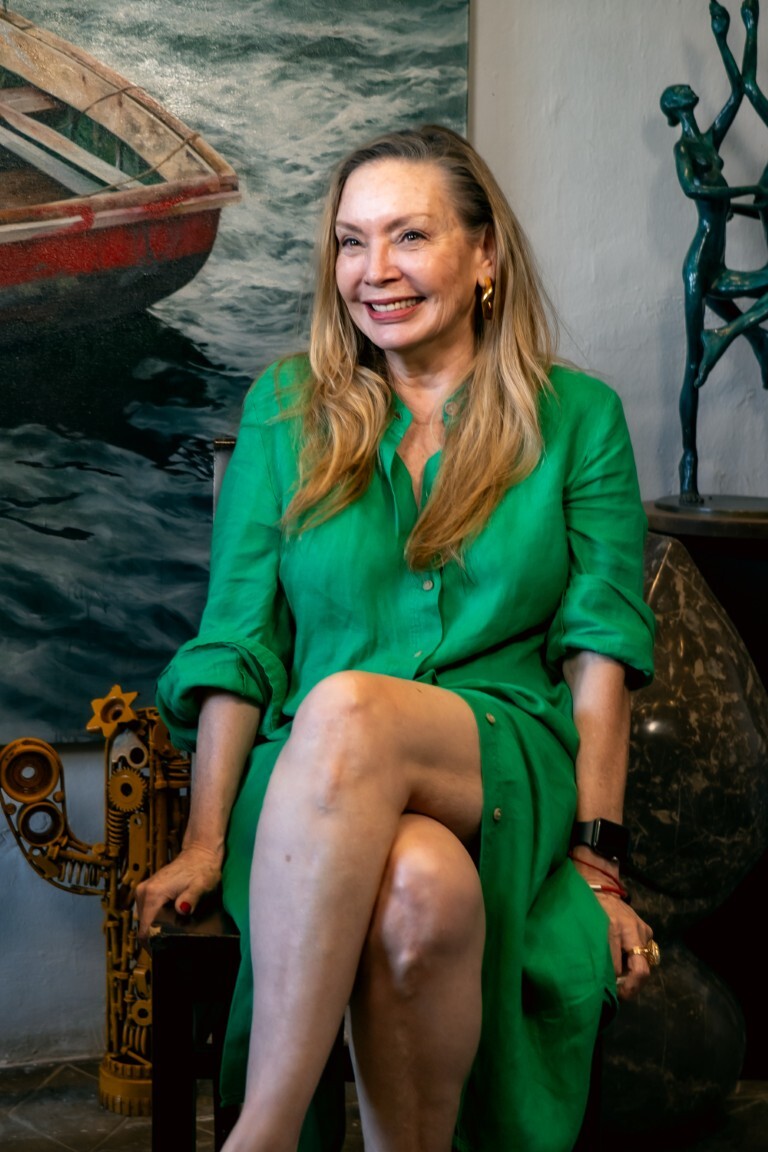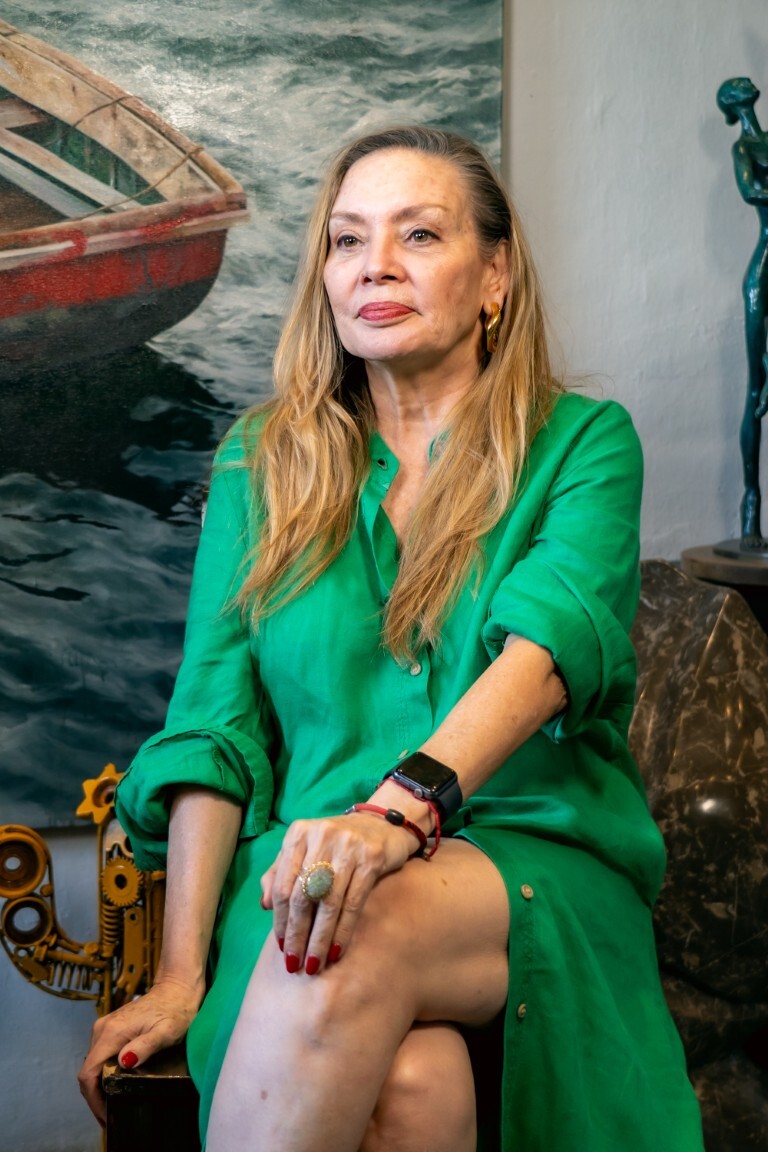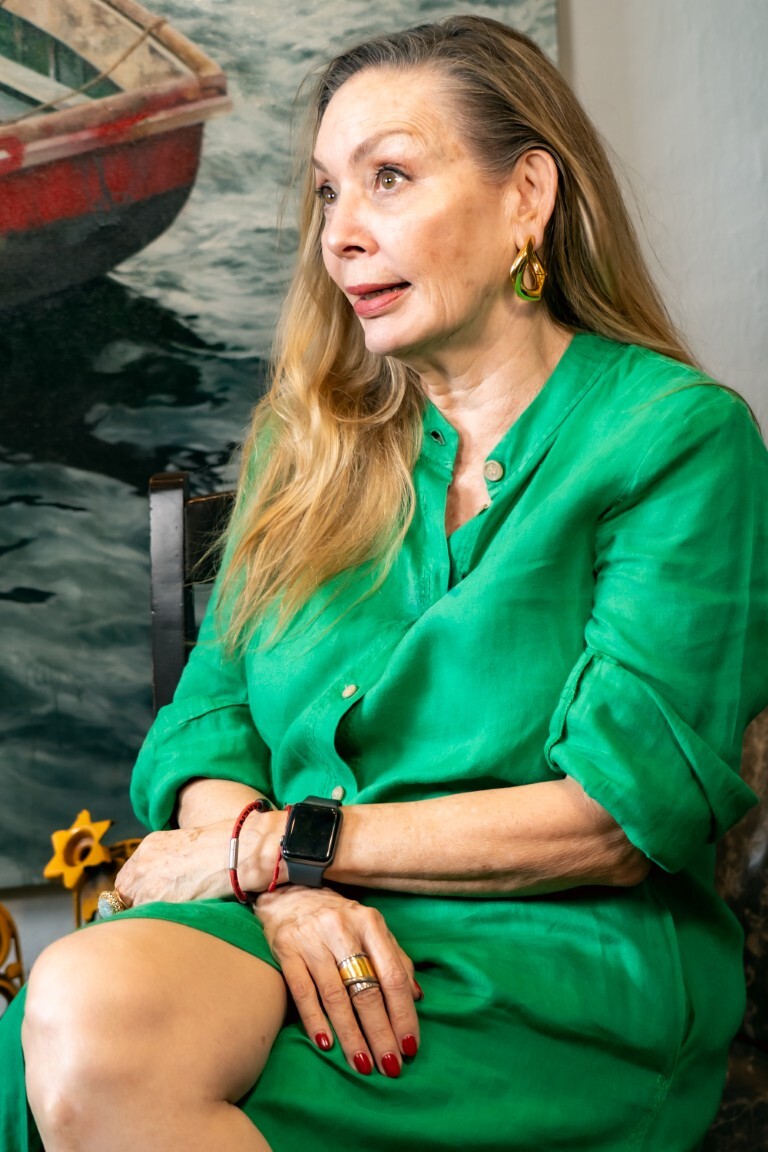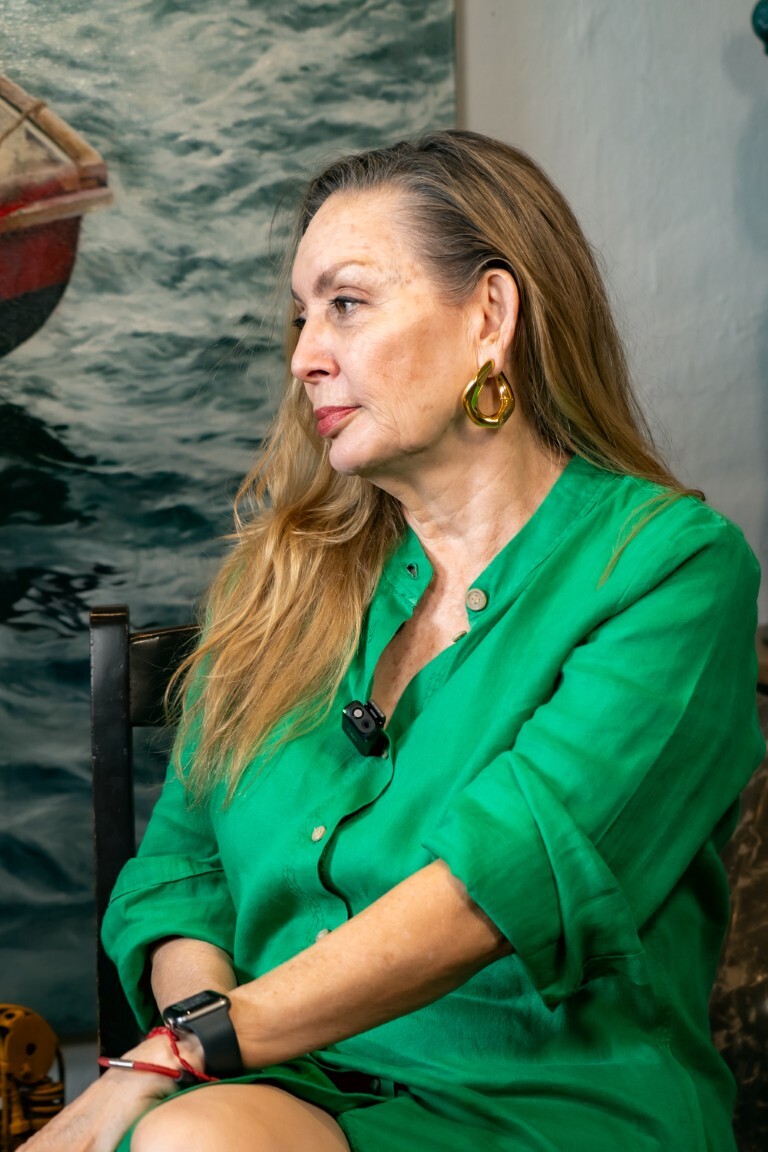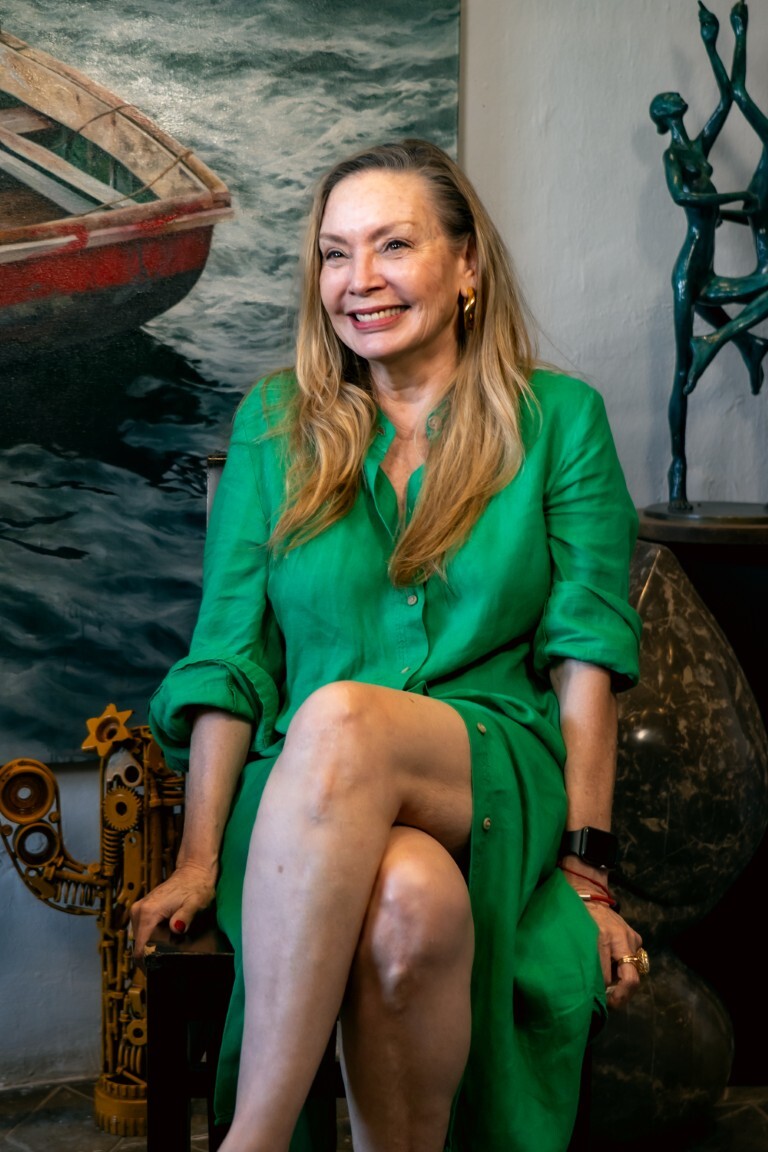
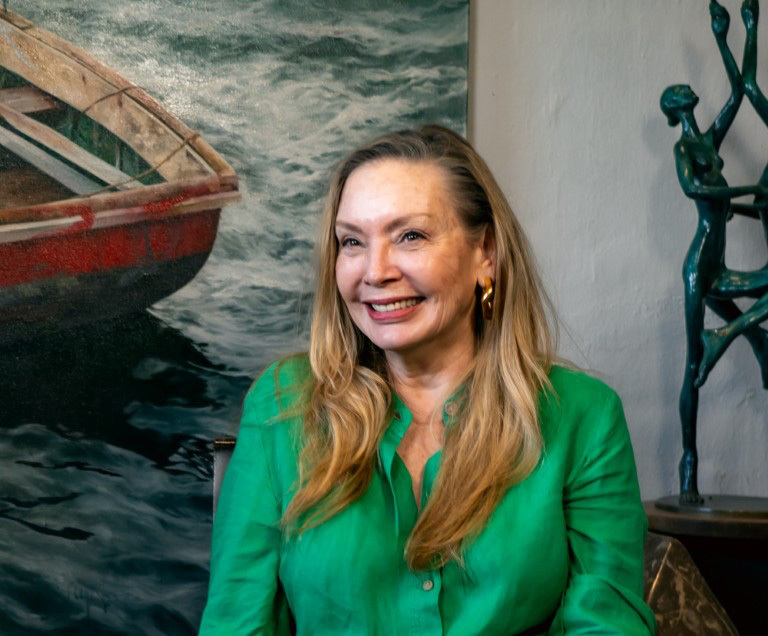
Patricia Mendoza
I decided to join the Historic Center Association in 2008, a difficult year due to the crisis and economic recession. I was encouraged to see that everyone shared the desire to help the community.
My origins on the peninsula
I was born in La Paz, Baja California Sur. For many years, I lived far from Los Cabos and my home state due to personal circumstances. However, after my mother passed away, I felt the need to return to my roots, motivated by nostalgia for my parents and the desire to be in my homeland. The only place where I could feel that closeness was here.
At that time, my sister Marta was living here. This happened eighteen years ago, when I saw the opportunity to develop my passion for art. There were already some cultural projects in place.
Figures such as Julián García and other artists and gallery owners had begun their work in downtown San José del Cabo. We are talking about more than thirty years ago. They started at Casa Paulina, in an environment where the streets were dirt roads and small bags of sand with candles were placed to provide light.
From that moment on, I knew I wanted to be here. Although at first I didn't think about having a gallery, I started doing exhibitions in hotels and noticed that tourists were looking for places to visit. That's when I realized I needed my own space, and for the first time in my life, I committed to a fixed schedule.
I chose San José del Cabo because my grandfather and mother were born here. Although the family home had already been sold, it is always comforting to know that they lived across the square, right in the center. Sometimes I walk along the estuary or through Palmilla and remember that my mother played there as a child and that I used to come with my grandparents.
I am proud to be the only native gallery owner. Over time, you learn to value those moments of reunion with people with whom you shared friendship, dreams, and goals. Some interests change, others remain, and the new friends I have made are very interesting. The sunrises and sunsets in La Paz continue to amaze me with their beauty.
Culture should be for everyone.
I joined the first meetings of the San José del Cabo Historic Center Association when business owners were seeking to protect it, as my dream was to bring art to the general public. I sought to attract great masters. I have collaborated with and represented artists with distinguished careers; some have even exhibited in national and international museums.
Currently, I promote more local artists, although there are few natives. Even so, it is important to bring emerging talents closer to established artists so that they can grow and sustain themselves in the medium.
My goal has always been to show art to everyone. When I began interacting in the area, municipal workers recommended that I contact the Historic Center Association. I also sought to become part of the Art District, but I was informed that I had to have at least one year of experience in a gallery open in the center.
Finally, I decided to join the Historic Center Association in 2008, a complex year due to the crisis and economic recession. I was encouraged to see that everyone shared the desire to help the community. Thus, I managed to organize an exhibition by Carmen Parra, who has participated in museums, biennials, and competitions, and has even represented Mexico City. It was a challenge, but they trusted me, and we succeeded.
The importance of collaborative work
At that time, Enrique Silva was the president and several projects were launched, including: Cheese, bread, and wine. For years, we met on Mondays at nine in the morning, each with different committees; I was assigned to the galleries committee, which later led me to become secretary of the board of directors.
As in any association, there were moments of disagreement, but the major project of remodeling the Historic Center was achieved, even though this led to differences of opinion with some friends.
The task was not easy: we presented the project to the mayor, the Senate, the Chamber of Deputies, and the governor. There were changes in the administration, and we had to start over, but we finally obtained the resources. Irene Bustos contributed the architectural design; what you see today is the result of that collective work and effort.
Unfortunately, the municipal government has not completed the maintenance of the area, which would be fantastic if it were done. It was an important project that received a lot of media attention. I believe it is a fundamental and key part of the current success of the Historic Center of San José del Cabo. The biggest challenge was convincing the authorities that our work was for the common good.
The board of directors was very committed and democratic; opinions were respected and decisions were made jointly. There was a lot of talent, as coordinating and promoting an association is no easy task. After Enrique Silva, I remember that Rosa Luz Treviño replaced him; later, Blanca Pedrin took over as president.
Looking to the future
Now, I believe it is essential that more young people get involved, contribute new ideas, take on responsibilities, and love this place. It is key to document history so that new generations of entrepreneurs understand the pillars and rules that govern us and must be respected.
The dissemination of art requires resilience, but it also represents the preservation of our history and is a major attraction for tourism.
Galería