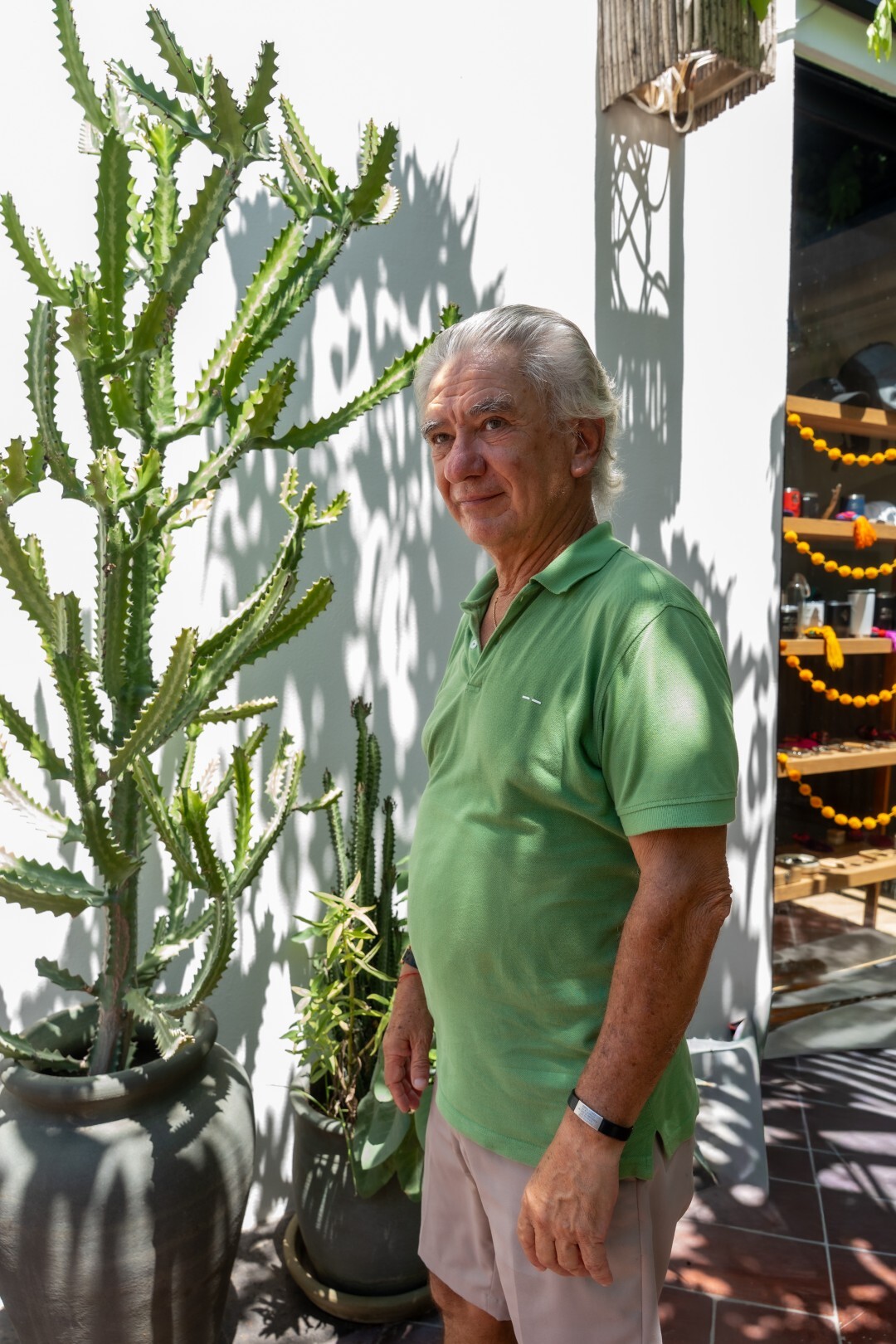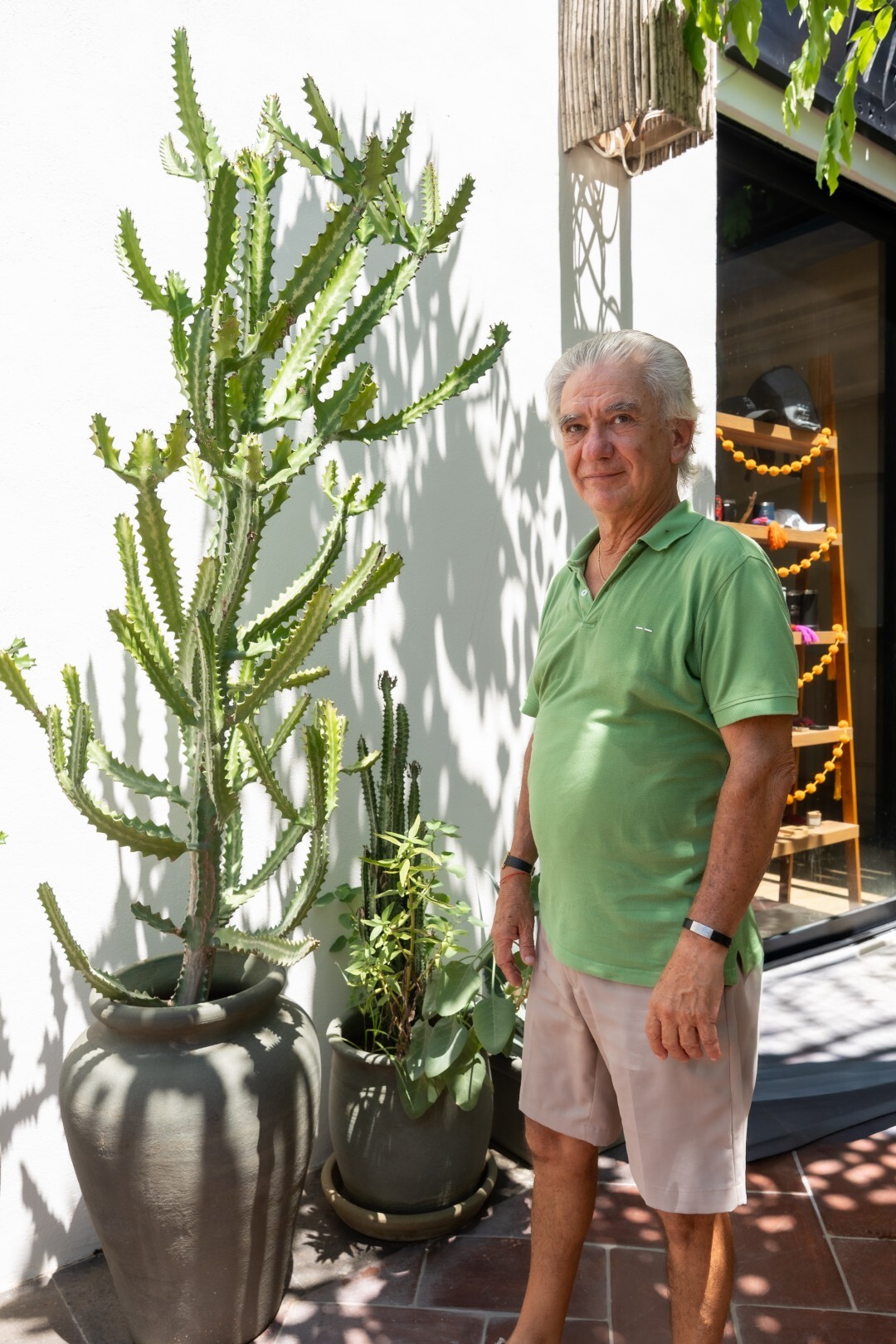
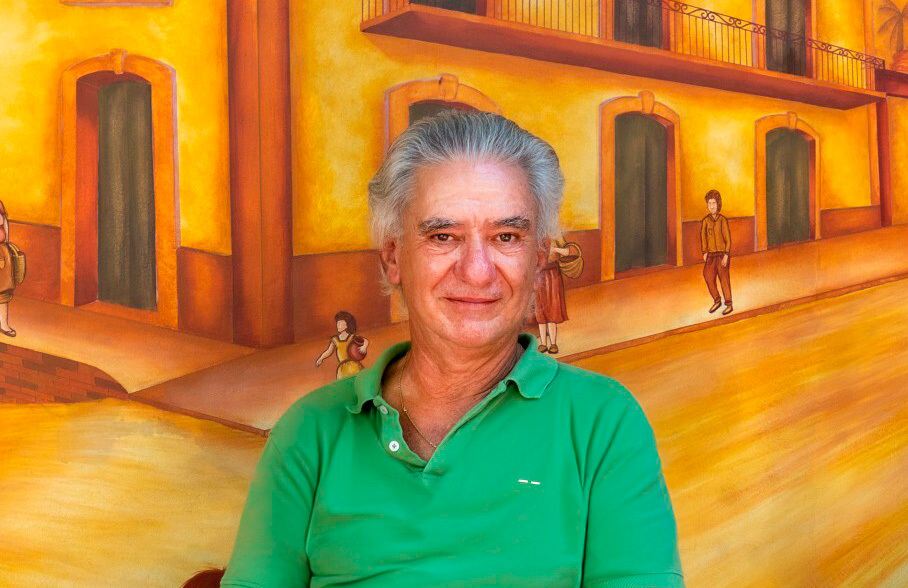
Gabriel Corral
I have known Los Cabos since 1962, when there were only 1,300 inhabitants. Today, the population exceeds 400,000, and we still feel like one big family. Back then, you could leave your car and house unlocked, sleep on the sidewalk in summer, and everyone knew each other.
Beginnings in the Historic Center
I became involved with the Historic Center through a group of friends, including Blanca Pedrín, Enrique Silva, Andrea Ehrenberg, and Irene Bustos, who played a particularly active role in the renovation project. Without this project, the necessary resources to carry out the renovation might never have been obtained.
Family History
My family has been in San José del Cabo for 125 years. Our journey began with Almacenes Goncanseco, known as La Voz del Sur. We later ventured into cattle ranching and real estate development, a stage I joined in 1987 when I arrived in Los Cabos to open a development. From there, I became involved in various community activities, such as Grupo Madrugadores, Rotary Club, the San José del Cabo Historic Center Association, Club del Corcho, and I am currently participating in a major development in Cabo del Este, where we have approximately 630 meters of beachfront and three kilometers of depth. The future development of Cabo del Este promises many opportunities.
Work in the Historic Center
I was the first treasurer of the Historic Center. At that time, we coordinated a casino night in which most of the tenants collaborated to organize the event. Afterwards, we invited 40 people to donate a bench each, worth $400. Each bench bore the name of its donor and was installed in Plaza Teniente Antonio Mijares for visitors. However, these benches disappeared during renovations, and their whereabouts are unknown.
The board worked as an excellent team of merchant friends who did not compete with each other but supported each other. When I arrived, there were seven real estate offices; currently, there are more than 90. San José del Cabo is a highly sought-after city for its bustle and the charm of the Historic Center. We tenants try to provide solutions to the municipality to preserve it as best as possible. Being assertive means identifying problems and proposing solutions, involving authorities such as the treasurer, the mayor, or the governor when necessary.
Currently, we are looking to regroup to work together on events, advertising, and whatever else is necessary for the maintenance of the Historic Center.
Remodeling Achievements
One of the most important achievements of the renovation was rebuilding all the roads using porphyry and cobblestones, as well as constructing sidewalks and installing underground electricity and telephone services, eliminating utility poles. All corners were equipped with ramps for people with disabilities. In addition, parking spaces for loading and unloading trucks have been provided, mainly on Morelos Street, and access for large trucks has been restricted by the traffic department.
Public works have maintained the original colors of San José del Cabo, and about 15 native families remain involved in the project. My family, with more than a century of presence, preserves photographs, newspaper clippings, and other valuable materials to preserve local identity.
Challenges and Preservation of Identity
I believe that the greatest challenge is to preserve the identity of the Historic Center, avoid business duplication, and work to maintain these blocks as they were in the 1900s.
Experience as Treasurer and Community Involvement
My grandfather was treasurer in many positions in Mexico City, and I have held that role for 15 years in the Red Cross alongside Dr. Crescencio González, 33 years in Grupo Madrugadores, two years in Club Rotarios, and I was the first treasurer of the Historic Center. I have been treasurer in almost all the organizations in which I participate.
Grupo Madrugadores began in 1987 with seven members: Carlos Manuel González, Javier Arámburo, Héctor Green, Atilio Colin, Fidel Campos, Professor Guerrero, and Crescencio González. This group was formed when they got together to have coffee and talk, identifying needs in the community. Then they met the Madrugadores group from Tijuana and established the local group.
Personal Motivations and Acknowledgments
I thank God for living in Los Cabos, and I always try to find the positive in adverse situations. I arrived at the invitation of my parents after suffering several assaults in Mexico City in 1986. They suggested I move to Los Cabos, and although they bet I wouldn't last more than six months, I've been here for 38 years. The proximity to familiar families and the support of my wife Edith Palacios, whose father was the first municipal president, helped me settle in and open doors in the community.
If I had to leave Los Cabos, I wouldn't find a place like it anywhere else in Mexico. We have 170 kilometers of beaches, many of which are still pristine, although the hotel zone is concentrated in just 30 kilometers. In addition, we are the state with the most kilometers of beaches and the smallest population, which represents great opportunities for the future.
Current Challenges and Future Vision
Twenty years after the renovation, problems with wear and tear and materials have arisen, but we strive to preserve what we have, repairing with the same materials and maintaining the original essence. My future is to see my children and my community grow, always seeking the common good.
Life in Los Cabos and Personal Philosophy
In Los Cabos, I enjoy quality time, such as playing golf, dominoes with the Rotarians, and traveling. My philosophy is to leave my mark, help as many people as I can, and never expect anything in return.
I have two children, Ignacio and Carolina, who are already entrepreneurs. We are very happy and grateful for the city and the friendship we share with its people. My main job is to help, always thinking about giving more and not expecting anything in return.
I have known Los Cabos since 1962, when there were only 1,300 inhabitants. Today, the population exceeds 400,000, and we still feel like one big family. Before, you could leave your car and house unlocked, sleep on the sidewalk in the summer, and everyone knew each other.
Galería